

King Me!
No Kings? What about checkers, then?

I’ve never been big on marches. A few Labour Day parades and assorted protests back in the day. That’s about it.
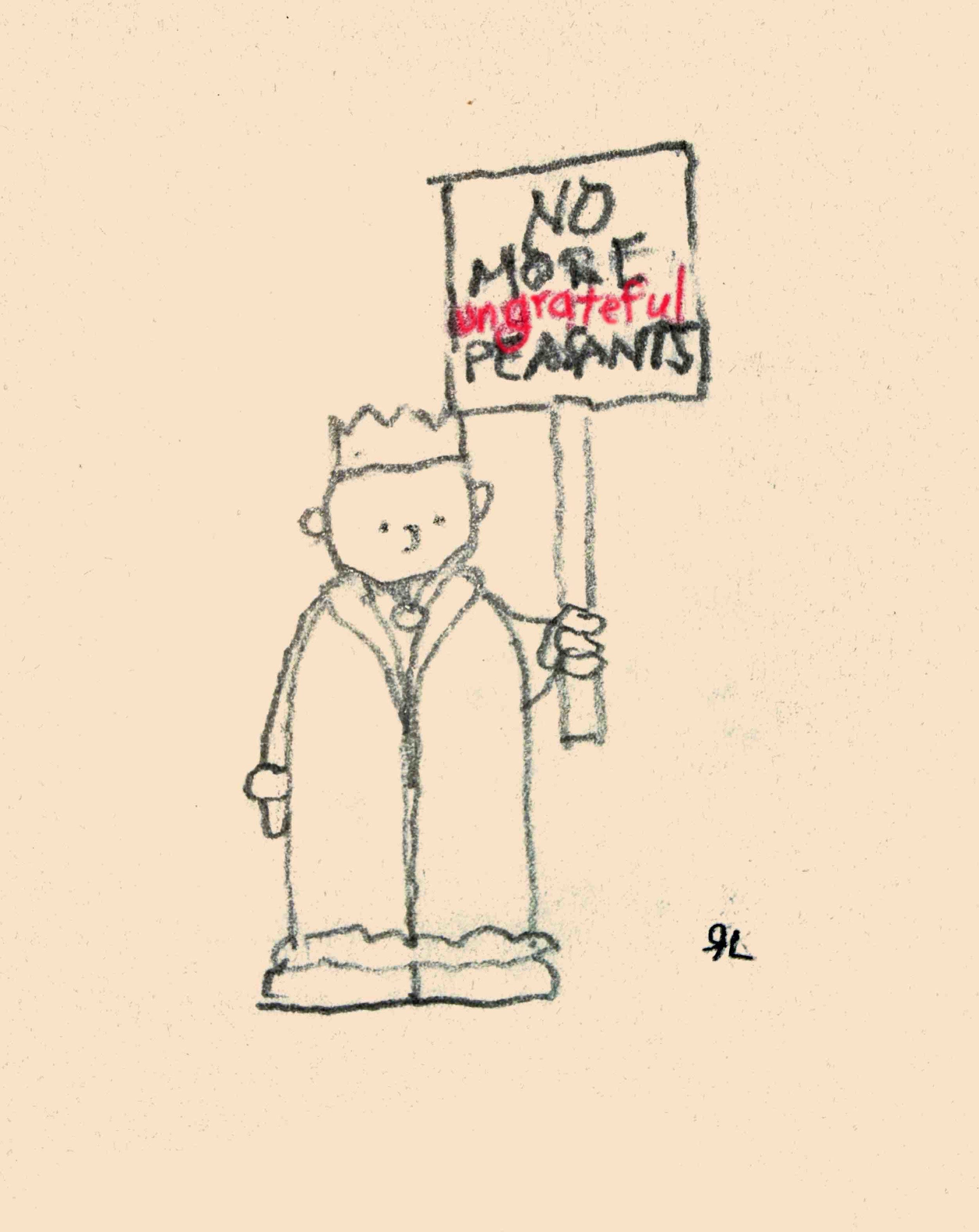
I respect people’s sincere desire to make a difference, but I personally find mass public displays of anything a bit cringeworthy, to be honest, even Santa Claus parades.
The people behind pubic protests and participating in them generally enjoy a lot of privilege. They are educated, hooked into the culture, media savvy and mobile. Maybe they would be more effective flexing the power of their pocketbooks or joining a political party. But they get captured, as we all do, I suppose, by the spectacle. In any event, it’s not for me.
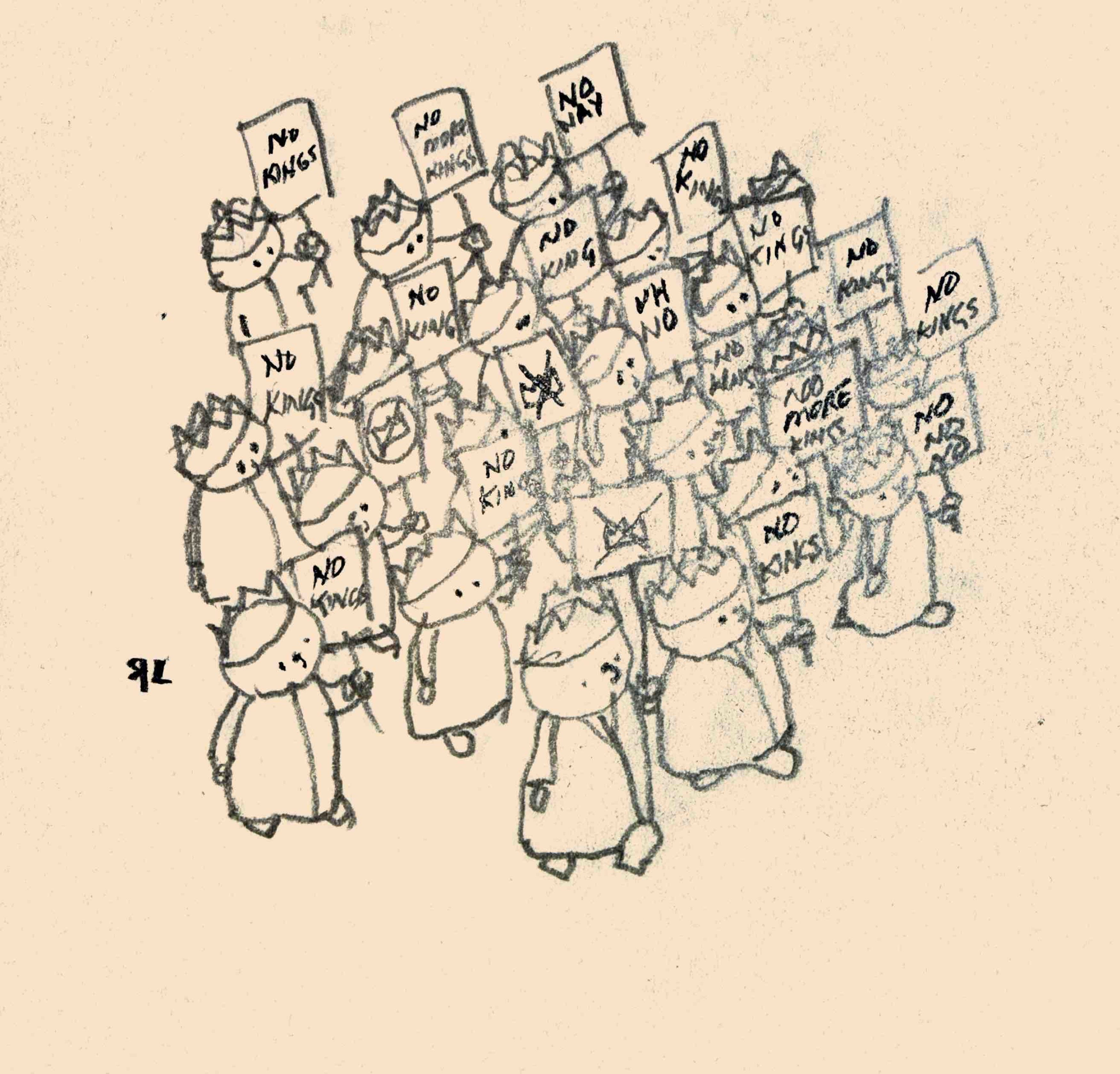
That said, it is not lost on me that the No Kings movement's March 28th event covered 3300 locations and involved an estimated 8 million people. That is a lot of unhappy campers. My beef is not with their purpose — to depose President Retard before he destroys the world.
But, as I said, I find the means cringe. And I wonder about the assumptions or presumptions underlying it. You and me were once a disorganized, ignorant rabble. We became a well-informed, organized and conscientious middle class capable of making coherent protests only with a fair degree of economic prosperity, which was provided how exactly? … Right.
A bit of research shows that such contradictions are endemic to critique. They can’t be avoided, but neither are they fatal; they do not disable, devalue or discount the critique itself.1
Nevertheless, for me personally, the whole thing smells like teen spirit, when it does not digress into downright terrible two-year-old tantrums as we’ve seen in Minnesota, Portland and other places.
Also, I cannot help feeling sympathy for the very idea of “kings.” Not that kings need defending by the likes of me, 2 but aren’t we all “kings” in some ways? Don’t we individually enjoy (or aspire to enjoy) “dominion” over our personal lives, homes, and careers? Is that so wrong?
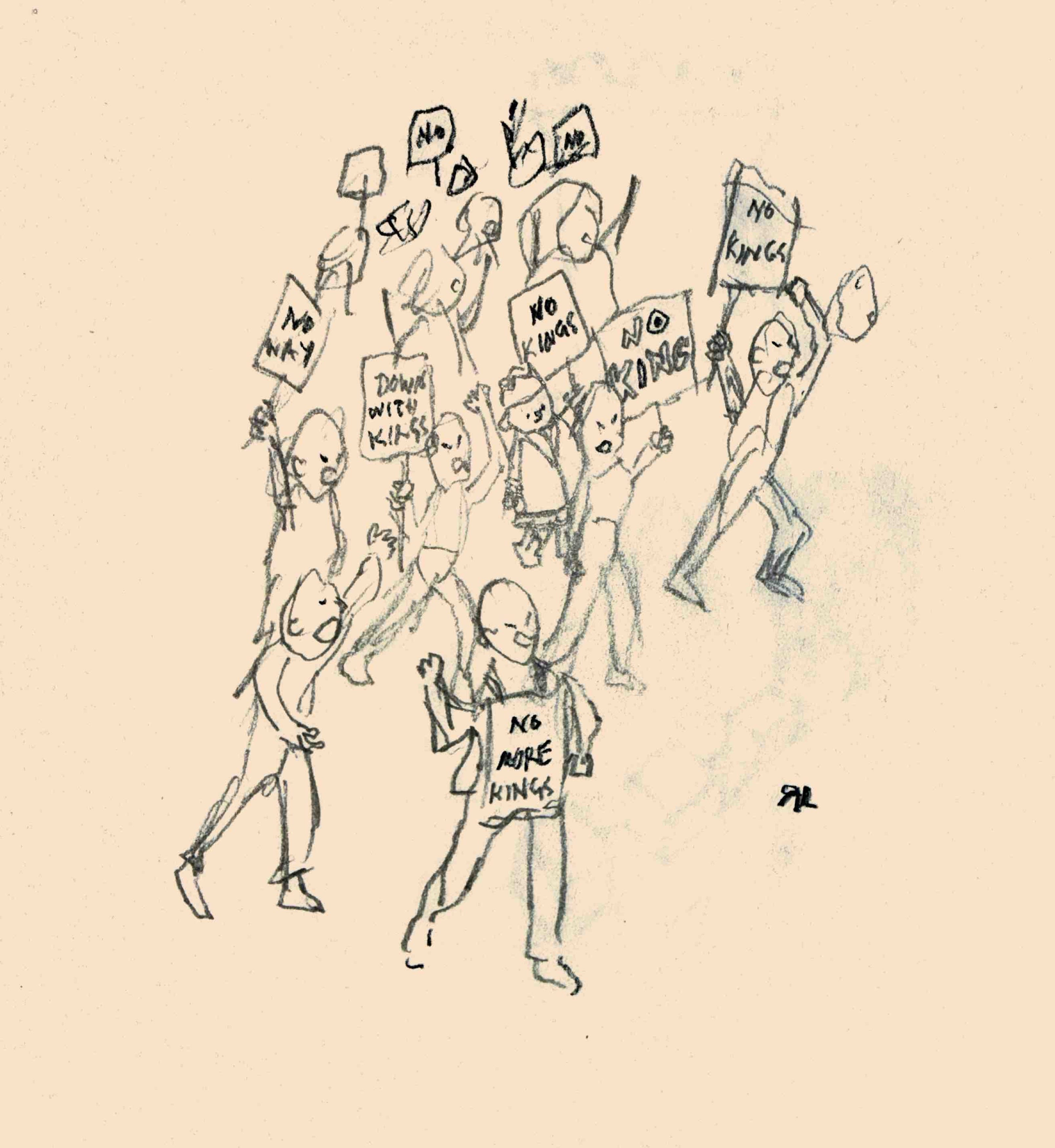
Of course, “no kings” does not literally mean NO KINGS AT ALL ANYWHERE FOR ALL TIME. It means, in the USA, no President should be able to act like a king, making decisions by fiat, without accountability. Those are solid concerns. “Based,” if you will. It is an appeal to integrity, to using democracy and the constitution the way they were meant to be used, constructively.
Nevertheless, it’s a strange metaphor for people in the US to use. One thinks of the era of John F. Kennedy, known as “Camelot.” I suspect many people there would be quite happy with “a good king” — noble, kind, and generous — like the King Arthur of legend. Google “good kings” and you’ll find many examples: Where would the Scots be without Robert the Bruce, who won their independence?
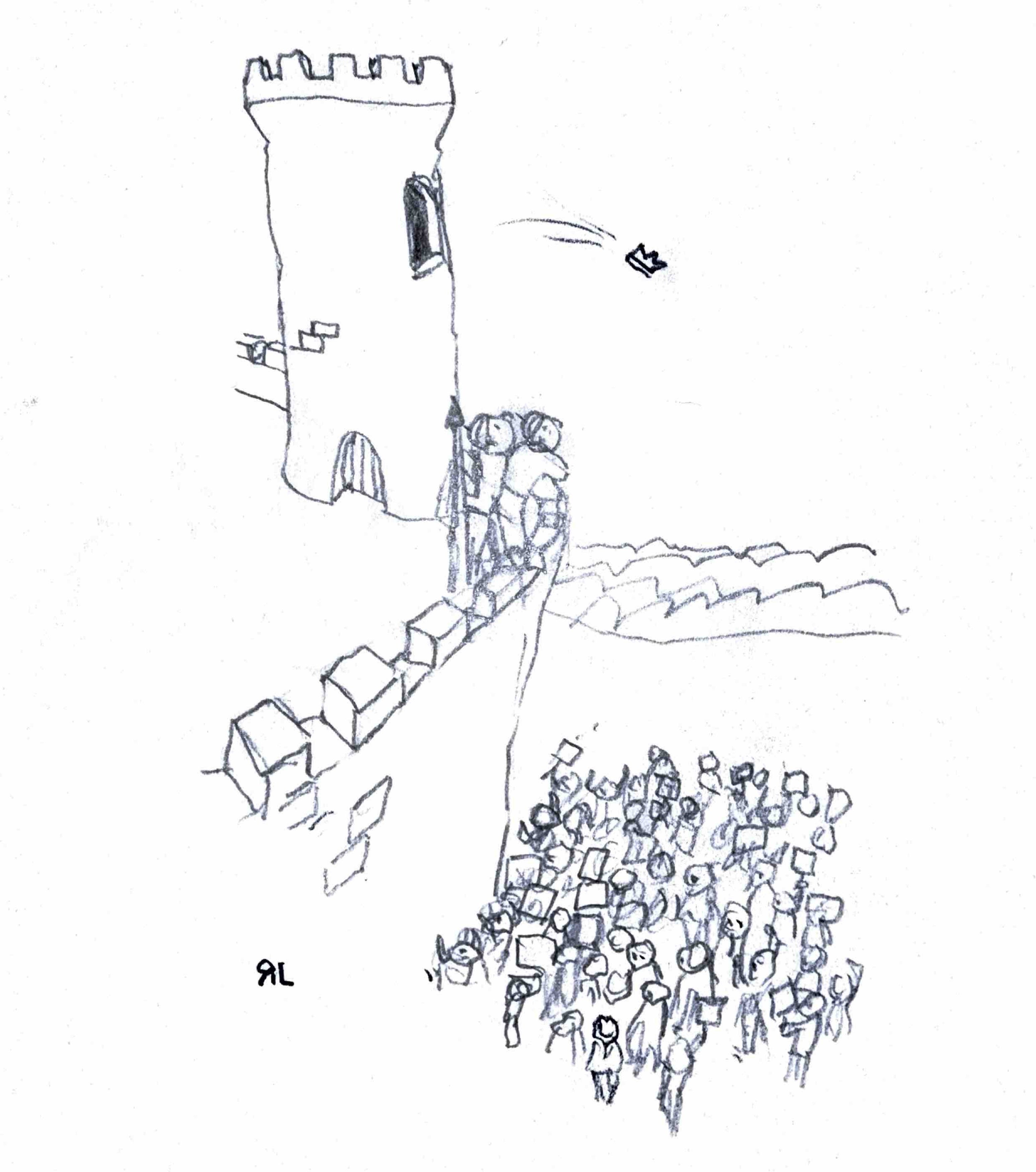
Caveats and contradictions notwithstanding, No Kings has a point and appears to be gaining momentum.
Popular uprisings have had results. The Shah of Iran gave up in the face of insurmountable public protest in 1979 — the country in utter disarray — and went into exile.
Napoleon was forced to abdicate, twice.3
We won’t talk about what has historically been required to overturn a monarchy —it ain’t pretty — or what comes after in the case of the Shah. Not today anyway. The marvellous Margaret Atwood has a fantastic series on The French Revvie,4 very much deserving your attention.
No King to check or mate, period?
I have gone on when I intended just to post a few doodles. Sigh…
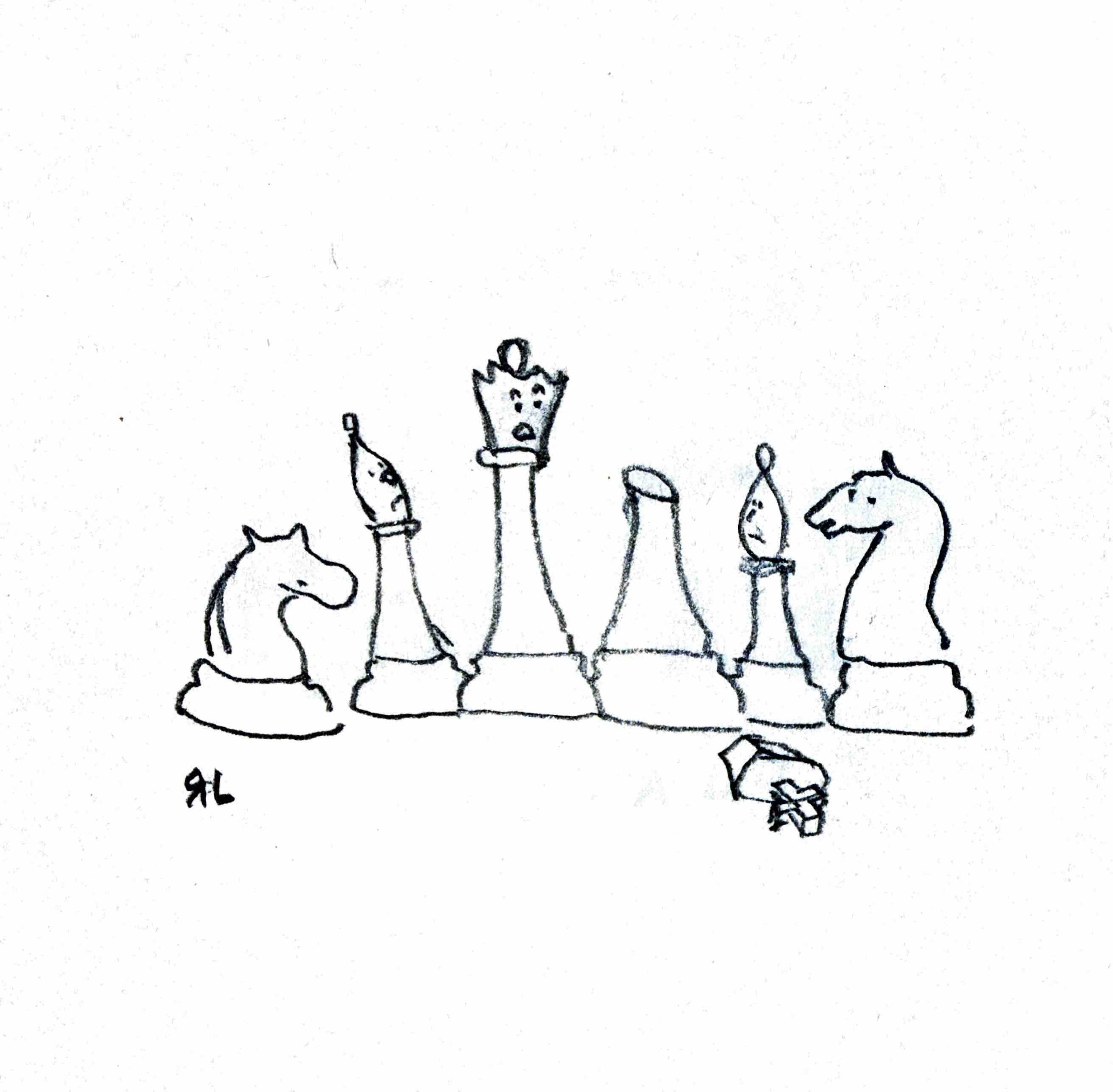
I despair, must we revisit every aspect of our culture that deals with “difference” and “power,” and level every playing field? Where will it all end?
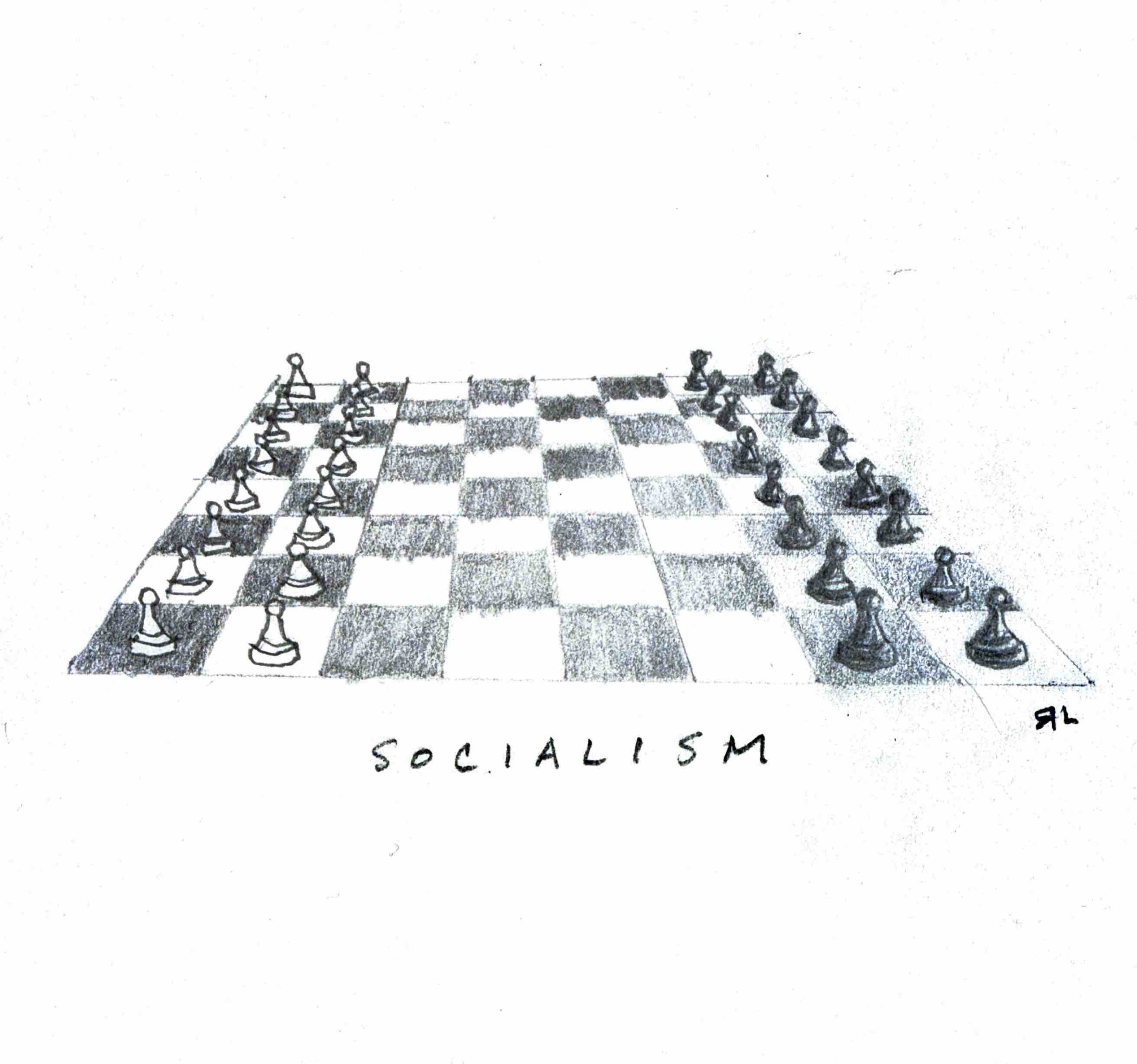
Thanks for reading. If you enjoy my somewhat erratic and pretty much always irreverent stream of drawing-consciousness, please consider upgrading to paid. Your contribution will make it possible for everyone to enjoy ‘Toonsday for free. (From each according to their ability, to each according to their need… How socialist is that?!!)
I looked this up just now: I Googled “criticism emerges from privilege,” and found this excellent discussion: https://roughtheory.org/2006/10/22/random-thoughts-on-privilege-and-critique/, which basically says it’s a contradiction that one must have “the means” to be able to criticize having the means. It cites this parable, worth repeating in full:
Horkheimer’s “Fable of Consistency” (from Dämmerung).
Two poor poets are invited to accept a considerable stipend by a tyrannical king who values their work. One is disturbed by the taint on the money. “You are inconsistent,” the other answers. “If you so believe, you must continue to go hungry. He who feels one with the poor, must live like them.” Agreeing, the first poet rejects the king’s offer and proceeds to starve. Shortly thereafter, the other becomes the court poet. Horkheimer finishes his “fairy tale” by cautioning: “Both drew the consequences, and both consequences favored the tyrant. With the general moral prescription of consistency, there seems one condition: it is friendlier to tyrants than to poor poets.”
Look it up and nowhere will you find who coined the term “no kings.” It is attributed to an organization called 50501. https://www.nokings.org/about-nk; https://www.fiftyfifty.one/
This makes sense of course. It’s a populist, popular movement. It does not matter who came up with the idea. I’d just like to know. Attribution is not about crowning kings, or is it?
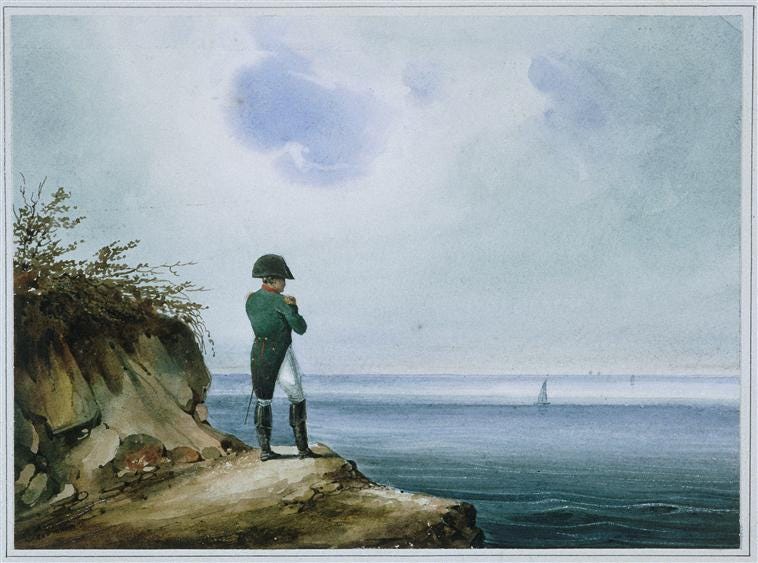
Once was not enough. In his firs first exile, he turned the island of Alba into a prosperous community, was adored by the people and returned to France to be greeted by the open arms of the soldiers who had served under him. Image by František Xaver Sandmann - http://musees-nationaux-malmaison.fr/musees-napoleonien-africain/phototheque/oeuvres/francois-joseph-sandmann_napoleon-a-sainte-helene_aquarelle_1820, Public Domain, https://commons.wikimedia.org/w/index.php?curid=246932
